Who Was Ivy Lee?
To understand the history of public relations, people must understand who Ivy Lee is and the impact he had on the field. Not only was Lee one of the most influential figures in Public Relations, but he was also one of the most controversial. In Drilled (2023), the episode “The Oil-Nazi-Propaganda Triangle” examines how Lee shaped the fossil fuels industry’s reputation for information going to the public and strategies that are still in place today (Drilled, 2023).
His life shows a clear picture of the upsides and downsides of PR: while it can be used to show honesty and spread truth, it can also be used to shield the dark truths of powerful people from the public. Unlike other advertising agents at the time, Ray Hiebert explains that “…Lee was not simply interested in promoting his clients by selling their products, personalities, or ideas, but rather he was concerned with achieving public understanding for them” (Hiebert, 1966). This idea of communication was what Lee eventually called “publicity,” and he stressed that every area of communication had the ability to relate any group to another.
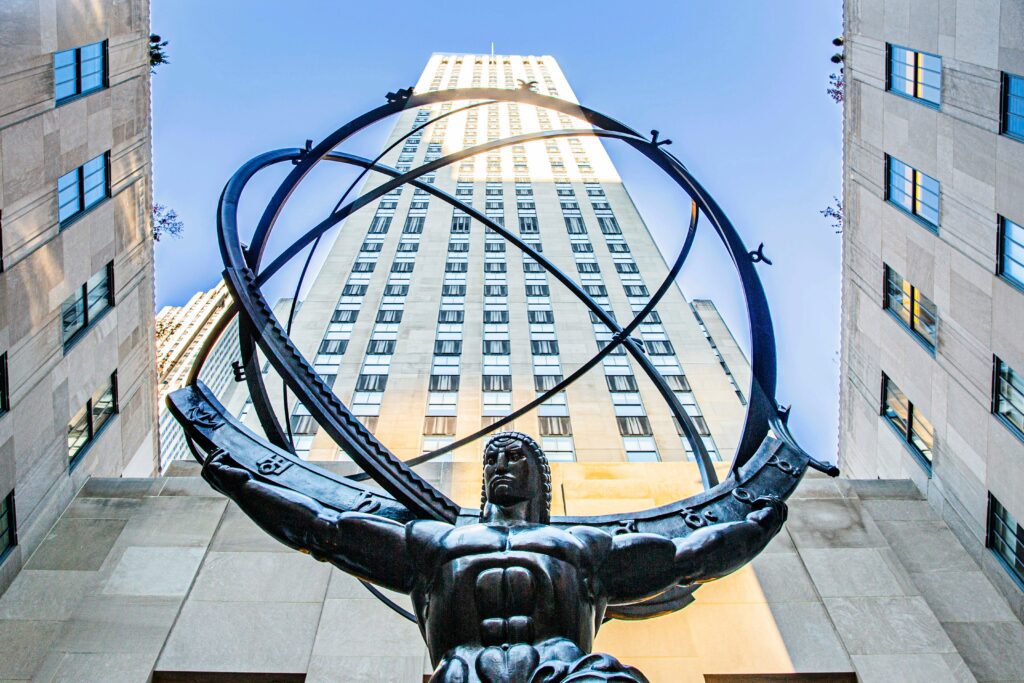
Photo by Seth Doyle on Unsplash
The Rockefeller Transformation
In the episode, Lee is described as making some of his most important contributions to PR through his work with Standard Oil and the railroads, but his most significant success came with the Rockefellers (Hiebert, 1966). After being hired to manage a major controversy in the Colorado coal fields, which the Rockefeller’s partly owned, Lee advised that the family create a sense of transparency, meaning to be open and clear with information, and adjust their policies to better align with public opinion (JMC-3413-001, Ethics and Public Relations, slide 5). His strategy was extremely effective, and it ended up transforming the Rockefeller name from being seen as a curse into being viewed as a symbol of social responsibility (Hiebert, 1966).
Ethical Controversies in Public Relations
Throughout his career, Lee strongly believed that these strategies could be used to solve public conflict and create peace internationally. With communication skills being used to create compromise, he felt that the world could gain international understanding. Therefore, Lee began to dedicate himself much more to international public relations. This eventually led Lee’s firm to represent foreign clients such as the German Dye Trust and even Joseph Goebbels, a Nazi official. These associations highlighted the serious ethical risks inherent in public relations (Hiebert, 1966).
Towards the end of his life, Lee was even under investigation for possibly acting as a Nazi propagandist, exploring how PR tools can easily be weaponized. Despite these concerns, people still consider Lee fundamental to Public Relations today. He is seen as a turning point in communication practices, urging people to use his Declaration of Principles, which called for greater accuracy and public accountability. He insisted that companies should engage with the public rather than hide from it. This tactic is still a central strategy used in crisis communication today.
The Ivy Lee Method
Interestingly, Lee’s impact goes far beyond PR itself:
- Today, people tend to focus on achievements while ignoring ethical controversies.
- Charles M. Schwab of Bethlehem Steel hired Lee for productivity advice (Clear, 2020).
- Lee’s method: list and prioritize six tasks daily, now called the “Ivy Lee Method.”
- The method influenced not only public relations but also broader business practices and management culture.
- Historical figures like Lee are often remembered for innovations like this, portraying him as a creative problem-solver.
- However, these accounts often overlook the more controversial parts of his career.
Why Ivy Lee Still Matters
Ivy Lee’s life truly shows how public relations is never value-neutral. His impact on PR is undeniable. His methods continue to shape how industries communicate with the public in today’s society, but PR professionals must also understand his controversial alliances and remind themselves that in this job everyone has to balance influence with ethical responsibility.
References
Clear, J. (2020, January 21). The Ivy Lee Method: The Daily Routine Experts Recommend for Peak Productivity. https://jamesclear.com/ivy-lee
Doyle, S. (n.d.). A statue of a man holding a circle of life in front of a tall building [Photograph]. Unsplash. https://unsplash.com/photos/a-statue-of-a-man-holding-a-circle-of-life-in-front-of-a-tall-building-1OqCtYUWl-4
Drilled. (2023, July 30). S3, Ep2: The Oil-Nazi-Propaganda Triangle [Audio podcast episode]. In Drilled. Drilled Media. https://drilled.media/podcasts/drilled/3/drilleds02-e02
Hiebert, R. E. (1966). Ivy Lee: “Father of Modern Public Relations.” The Princeton University Library Chronicle, 27(2), 113–120. https://doi.org/10.2307/26409644
JMC-3413-001, Ethics and Public Relations. (n.d.) Chp3_Ethics and public relations_Unit 1_F24.pptx [PowerPoint slides]. Canvas. https://canvas.ou.edu/courses/410690/files/126430936/download?download_frd=1